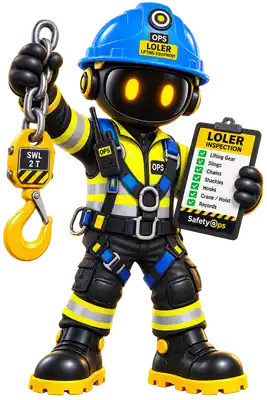
Lifting equipment and accessories sit on the same Equipment Register as everything else, so LOLER thorough examination history lives with the asset, not apart from it.
Platform
LOLER
Lifting equipment and accessories with thorough examination records.
Available
Overview
The LOLER centre is live: lifting equipment and accessories, thorough examination records, and defect severity captured directly against the examination.
Lifting equipment sits on the same Equipment Register as PUWER assets, using the same examination-recording workflow — one history per asset, not a separate LOLER-only list.
The thorough examination itself is carried out by your own competent person or appointed examiner. SafetyOps records the outcome, the report reference and any defect against the equipment — it never performs the examination, acts as the examiner, or issues the statutory report itself.
Why it matters
A thorough examination record that can't show its own history isn't much use in an inspection. Capturing report reference, severity and remedy date against every examination is what makes the record defensible.
Benefits
Thorough examination records
Report reference, defect severity and remedy-by date, captured per examination.
Critical/high defects raise actions
Significant defects create Action Centre records automatically.
Connected to the Equipment Register
Lifting equipment is part of the same asset register as everything else.
Workflow
- Lifting equipment is registered in the shared Equipment Register.
- Once your competent person or appointed examiner has carried out the thorough examination, its outcome is logged — report reference and any defect severity.
- Critical/high defects automatically raise an Action Centre item.
- The next due date is tracked so the following examination is visible before it's overdue.
Connected across SafetyOps
LOLER ↔ Equipment
Lifting equipment and accessories are the same asset records as everything else in the Equipment Register — not a separate LOLER-only list.
LOLER ↔ PUWER
Lifting gear that's also work equipment shares one register and one examination-recording workflow with PUWER, rather than duplicated records.
LOLER ↔ Action Centre
A critical or high-severity defect from a thorough examination becomes a tracked action automatically, not a note left in a report.
Interface
A dedicated interface for this module already exists in the SafetyOps application.
See thorough examination history managed properly
Report reference, defects and due dates, on the same equipment record your team already uses — book a walkthrough, or see the full platform.
Frequently asked questions
Does SafetyOps perform LOLER thorough examinations?
No — thorough examinations must be carried out by your own competent person or appointed examiner. SafetyOps records the outcome and tracks the resulting actions; it never acts as the examiner or issues the statutory report.
Can LOLER examination records and due dates be managed in SafetyOps?
Yes — report reference, defect severity, remedy-by date and the next examination due date are all tracked against the equipment, once your examiner has carried out the examination.
How does LOLER connect with lifting-equipment records?
Lifting equipment and accessories are registered once, in the same Equipment Register PUWER assets use — LOLER reads and writes examination history against that same record, not a separate list.
The examination stays with your examiner. The record stays with SafetyOps.
Report reference, defect severity, due dates and follow-up actions — organised evidence, never a substitute for the thorough examination itself.